Make time for biology games with the miniPCR Digital Arcade
Thursday, October 15, 2026
Looking for a fun way to reinforce biology concepts without adding another full lesson to your plans? The miniPCR Digital Arcade™ offers short, interactive activities that help students review essential molecular biology concepts through play.
Designed to make an impact in as little as five minutes, the Arcade is a flexible addition to your classroom toolkit. Use our games as bell ringers, transition activities, early-finisher assignments, or homework. Students can revisit key ideas, test their understanding, and build familiarity with important biological processes—all in a format that feels different from traditional worksheets and review questions.
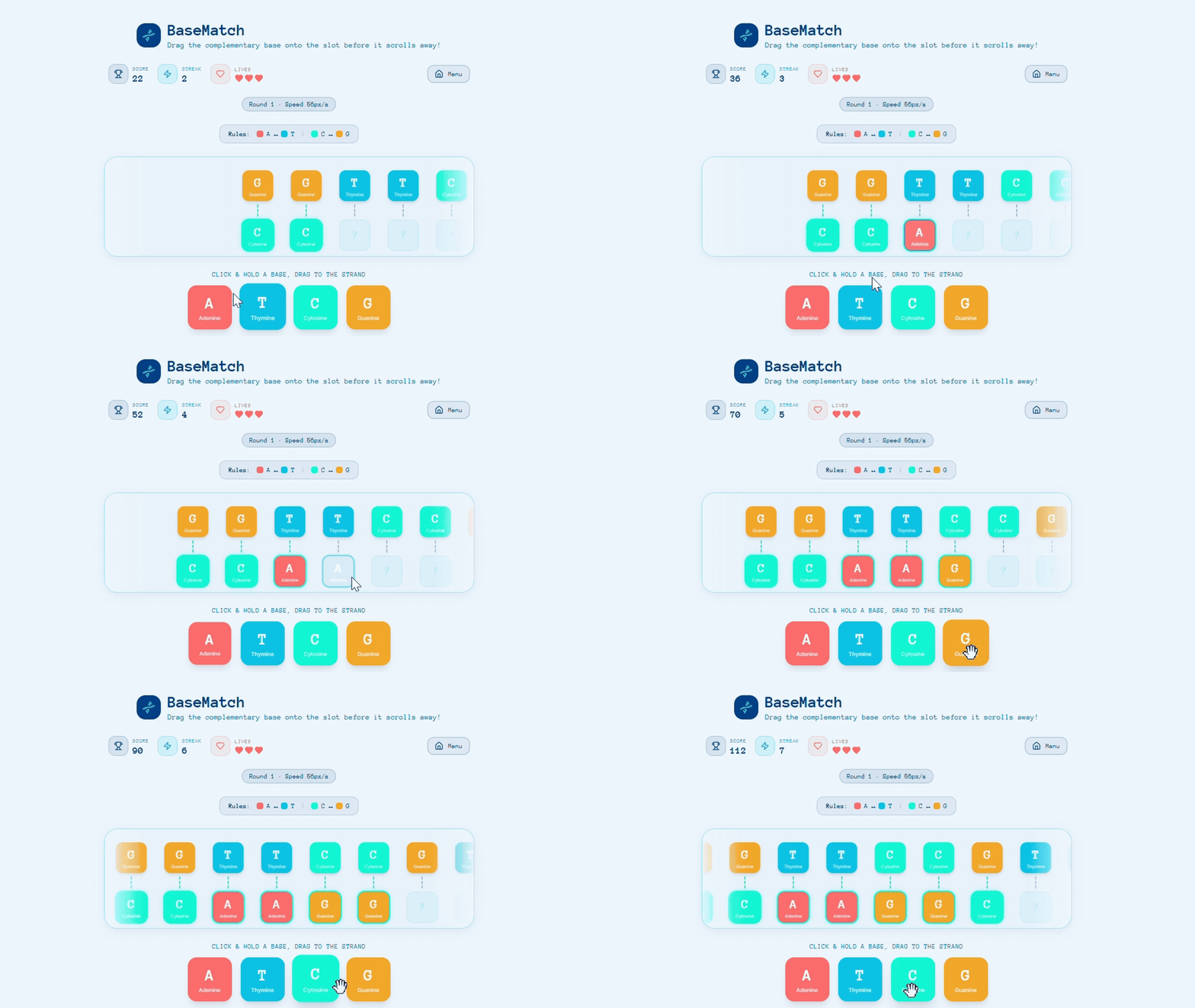 In the BaseMatch Arcade Game, users match nucleotides according to DNA and RNA base pairing rules.
Four biology games to try in your classroom
The miniPCR Digital Arcade features playable learning tools spanning a range of molecular biology concepts. Here are a few highlights:
- BaseMatch™: A DNA and RNA Base Pairing Game. How well do your students know their base pairing rules? In BaseMatch, students practice matching nucleic acid bases according to the rules of DNA and RNA. It's a quick way to reinforce complementary base pairing and help students become more confident working with genetic sequences.
- Enzyme Dash™: An Enzyme Function Game. Enzymes help drive the chemical reactions that make life possible. In Enzyme Dash, students digest substrates while avoiding inhibitors, reinforcing the relationship between enzymes, substrates, and inhibitors through interactive play.
- Peptide Factory™: A Translation Game. How does a cell turn genetic information into a protein? Peptide Factory focuses on translation, challenging students to match tRNAs to mRNA codons. Students practice codon-anticodon pairing while exploring how genetic information determines the building blocks of a protein.
- Gel Run™: A Gel Electrophoresis Game. Gel electrophoresis is a fundamental technique in molecular biology, but the movement of molecules through a gel can be difficult to visualize. Gel Run gives students an interactive way to explore how DNA segment length, agarose concentration, and voltage influence how fast DNA migrates through a gel.
How to incorporate biology games into your lessons
One of the advantages of short, interactive activities is their flexibility. You don't need to dedicate an entire class period to make them useful.
- Do-now and bell ringer activities: Start class with a quick game that revisits a concept from yesterday's lesson or prepares students for a new topic. BaseMatch, for example, can help students refresh their knowledge of base pairing before a lesson on DNA replication or transcription.
- Transitions between activities: Use an Arcade game to give students a productive change of pace between lessons, lab work, or other classroom tasks.
- Early finisher activities: Give students who finish an assignment ahead of their classmates an opportunity to keep practicing biology concepts independently.
- Homework and review: Assign a game for students to play outside class as a low-stakes way to revisit material before a quiz or test.
Because each game focuses on a specific concept, teachers can choose an activity that aligns with what students are learning. Games can also serve as a starting point for discussion: What did students find challenging? Which concepts were easiest to recall? What connections can they make to the day's lesson?
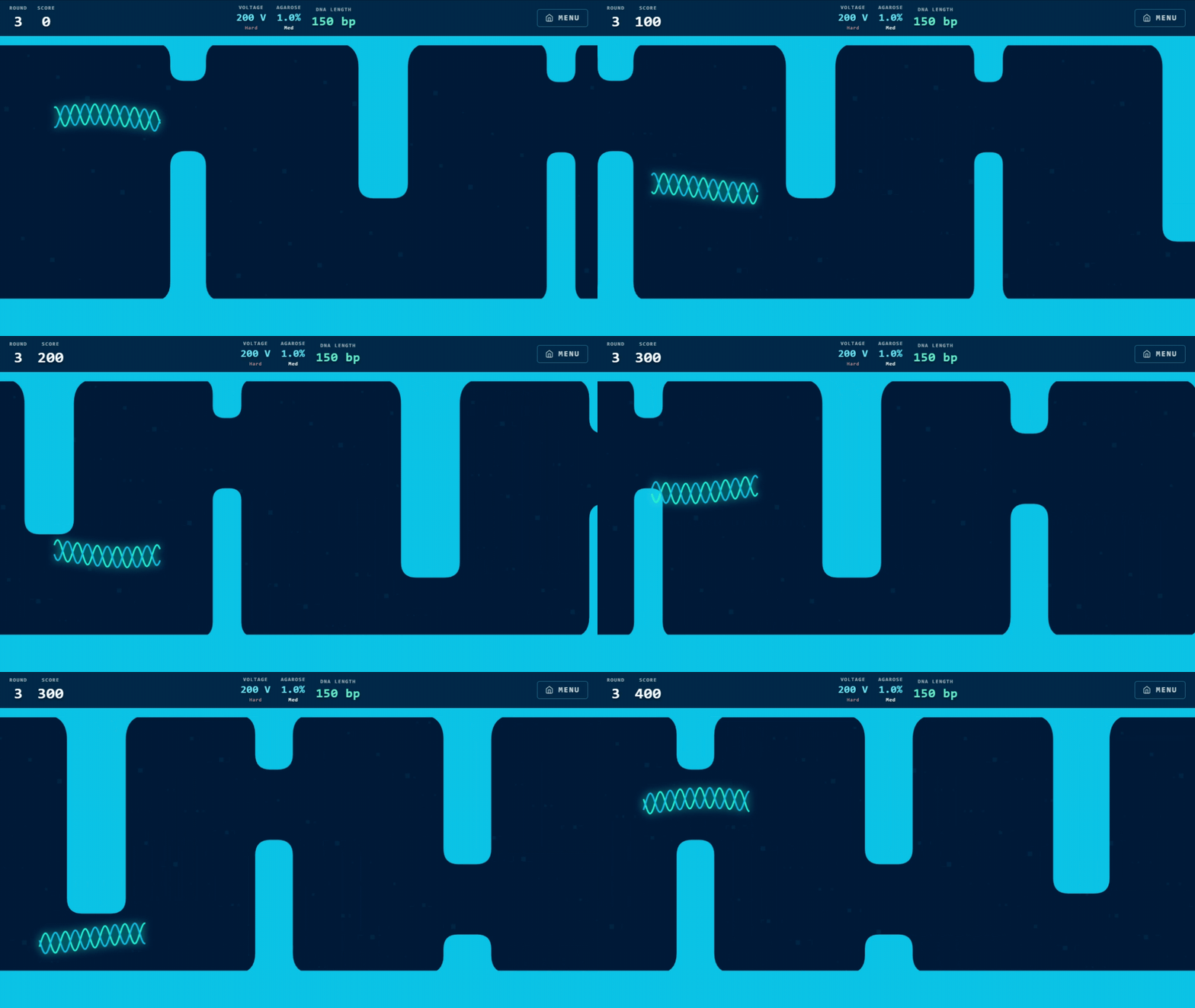 In the Gel Run Arcade Game, users steer a DNA fragment through the pores of an electrophoresis gel.
Try the miniPCR Digital Arcade. A little play goes a long way.
The miniPCR Digital Arcade isn't intended to replace deeper instruction or hands-on laboratory experiences. Instead, it gives students another way to engage with the science they're learning, with short activities that make reviewing essential concepts more interactive.
Whether you're looking for a five-minute warm-up or an easy way to extend learning beyond the classroom, the Arcade makes it simple to put a little biology into play.
Ready to play? Explore the miniPCR Digital Arcade and find your next classroom activity.